THROTTLE TWR DYNAMICS
Master the art of variable thrust. Optimize your engine's output in real-time to manage acceleration curves and maintain structural integrity during ascent.
Thrust Modulation Physics
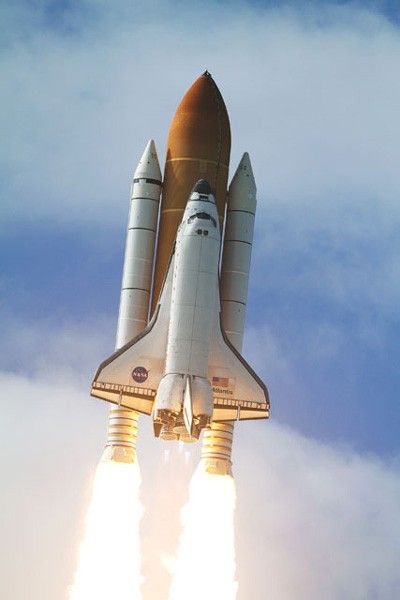
Throttle control is the primary mechanism for managing your Thrust-to-Weight Ratio (TWR) in real-time. By adjusting the mass flow rate of your propellant, you directly dictate the acceleration of the craft. The fundamental relationship is defined as: TWR = Thrust / (Mass * Gravity). To maintain a consistent, safe, and efficient ascent, you must modulate the Thrust value dynamically as the Mass value decreases. This prevents your craft from accelerating beyond its structural design limits (Max Q) while ensuring you reach orbital velocity without wasting fuel on excessive atmospheric drag.
Managing Acceleration Runaway
As your engines operate, propellant mass is expelled, causing the total vehicle mass to drop rapidly. Because your thrust force remains relatively constant while your mass decreases, your acceleration is not linear—it accelerates. The TWR behaves according to: TWR = F / (m(t) * g), where m(t) is a function of time. If you do not throttle down your engines as the fuel mass is depleted, your vehicle's TWR will climb until it exceeds the structural integrity of the airframe, a condition known as Max Q. Throttling is the active control system that keeps this runaway acceleration within the safe operational envelope.
Velocity Management in Dense Air
Aerodynamic drag force is proportional to the square of your velocity, represented by the equation: F_drag = 0.5 * rho * v^2 * C_d * A. During the early ascent, as you pass through the thickest parts of the atmosphere, high velocity is your enemy. If your TWR is too high here, the air resistance creates massive drag losses, wasting energy and putting extreme stress on your vehicle's structure. By throttling your engines down during the high-dynamic pressure phase, you keep your velocity within a "sweet spot" that minimizes energy loss due to drag, only opening the throttle fully once you have reached thinner altitudes.
Engineering the Throttle Bucket
The "Throttle Bucket" is the signature of an advanced flight profile. It is the precise operational window where you proactively reduce thrust—throttling "down" into a bucket—as your vehicle approaches the region of maximum aerodynamic pressure (Max Q). Once the atmospheric density drops sufficiently and your mass has been reduced by fuel consumption, you throttle "up" to clear the remaining ascent toward orbit. Mastering this maneuver ensures your vehicle survives the atmosphere while maintaining the highest possible efficiency. You now possess the analytical bridge between theoretical math and actual mission control: managing the throttle is managing the energy, and that is the key to every successful New Horizons flight.
Surgical Power Management
As your mission approaches the final stages—such as orbital insertion, soft landing, or docking—the objective shifts from overcoming atmospheric drag to achieving terminal precision. In these moments, your throttle management must transition to high-frequency, low-magnitude adjustments. By holding a TWR slightly above 1.0, you create a "hover" capability or a controlled descent rate. This phase of flight requires a delicate touch; you are no longer fighting gravity with raw force, but balancing it with measured precision. Mastering this level of control allows for the softest touchdowns and the most accurate orbital injections in your New Horizons missions.
The Master of Thrust
You have journeyed through the full architecture of throttle management: from the basic relationship between mass and force, through the necessity of mitigating acceleration runaway, to the fine art of drag-balancing and the surgical precision of terminal guidance. To be an integrated master of your New Horizons flight systems means knowing when to prioritize raw power and when to exercise extreme restraint. This synthesis is the ultimate framework for your missions. By treating your rocket as a dynamic, evolving system, you ensure that you are always in control—maintaining structural integrity, optimizing fuel efficiency, and hitting your targets with unmatched accuracy. You are the flight engineer of your own destiny, and now, you have the complete map to orchestrate every phase of your ascent.
The Art of Soft Touchdowns
When performing a vertical landing, your throttle system is the only thing standing between a successful recovery and a catastrophic impact. The challenge here is the "Hoverslam" or "Suicide Burn"—you must time your engine ignition and throttle setting so that your vertical velocity reaches zero exactly as your altitude reaches zero. Because your vehicle is losing mass as it burns, your TWR increases, requiring you to constantly decrease thrust to maintain a perfect descent profile. This requires high-bandwidth throttle control, where the engine must be capable of deep throttling—often down to 30 or 40 percent of total capacity—to ensure you do not overshoot your target or accelerate upward away from the landing pad.
The Latency Barrier
No engine responds instantaneously to a throttle command. From the moment your flight computer sends a signal to the valves to the moment the combustion chamber pressure stabilizes, there is a delay—known as throttle latency. In your control loop, this delay is a dangerous variable. If your software updates your thrust commands faster than the hardware can physically respond, you risk introducing "phase lag" or "oscillation," where the engine overcompensates, leading to instability. Designing a stable flight system requires balancing the control loop frequency with the physical response time of the engine hardware to ensure the rocket maintains a smooth, predictable ascent without fighting its own internal feedback loops.
Architecting for System Failure
In professional launch vehicles, the throttle system is never a single point of failure. Redundancy is achieved through multi-engine layouts, where the loss of one engine is compensated by increasing the throttle setting of the remaining ones. This requires the flight computer to perform real-time re-calculation of the vehicle's thrust-to-weight ratio to determine if an abort is necessary or if the mission can continue with the remaining engine capacity. True fault-tolerant design means the system can detect a valve failure or pressure drop, isolate the faulty engine, and instantly adjust the performance curve of the operational engines to maintain the planned trajectory.
Recommended Tools
View AllLoading recommended tools...
Written By


Dive Deep Space




Join Our Newsletter
Stay updated with the latest astronomical discoveries, space mission updates, and community events from HORIZONS. It is an honor to have you join our journey through the stars.