LIFT-OFF TWR MASTERY
Calculate the critical thrust-to-weight ratio required for a stable launch and analyze the physics of overcoming gravity losses during initial ascent.
Defining the Ascendance
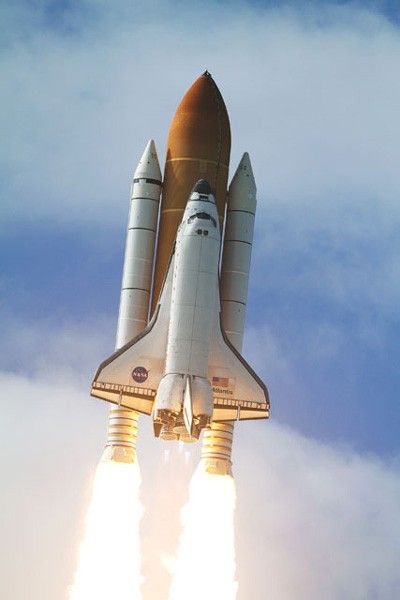
In the mechanics of flight and orbital launch, the Thrust-to-Weight Ratio (TWR) is the fundamental governing factor of ascent. It is a dimensionless ratio that compares the upward force generated by your engines to the downward force of gravity acting upon the vehicle's mass. For a craft to lift off, the TWR must be greater than 1.0; if it is less, the craft remains tethered by its own weight. Understanding this balance is the key to engineering efficient launches, where we aim for a TWR that provides enough acceleration to overcome gravity quickly without wasting fuel or exceeding the structural limits of the airframe.
Mass as a Dynamic Variable
In rocket engineering, mass is not a static constant—it is a rapidly depleting variable. As your engines burn through propellant, the total mass of the vehicle decreases continuously. Since TWR = Thrust / (mass × gravity), as the mass in the denominator shrinks, the TWR value rises automatically. This means that a rocket which barely clears the pad at TWR ≈ 1.2 can reach an aggressive TWR > 3.0 just moments before main engine cutoff. Managing this "acceleration runaway" is vital to ensure that structural loads (Max Q) remain within safe operating parameters for the vehicle.
The Gravity-Drag Trade-off
Your flight path is a continuous compromise between two primary energy thieves: Gravity Losses and Aerodynamic Drag. If your TWR is too low, you spend too much time fighting gravity (Gravity Losses), burning precious fuel just to hover while gaining little velocity. If your TWR is too high, you accelerate too aggressively through the dense lower atmosphere, resulting in massive energy waste against air resistance (Aerodynamic Drag). The "optimal" ascent profile is a delicate curve that minimizes the sum of these losses, often starting slow to limit drag in thick air and accelerating as you reach thinner altitudes.
The Art of the Ascent
You have journeyed through the architecture of the launch—from the raw definition of the Thrust-to-Weight Ratio and the reality of mass depletion, to the intricate physics of gravity losses versus aerodynamic drag. True mastery in aerospace engineering is found in the synthesis of these variables. By viewing your flight as a dynamic, evolving system, you can move beyond simple "will it lift?" calculations to designing refined, efficient ascent profiles. Whether you are launching a research probe or a complex payload in your New Horizons missions, you now possess the analytical map to balance power, efficiency, and structural safety. You are no longer just building a rocket; you are orchestrating an ascent.
Engineering the Ascent Curve
As your rocket burns fuel, the shrinking mass causes the TWR to climb exponentially, often leading to dangerous acceleration levels by the time the stage is nearly empty. To counter this, engineers employ "throttle bucket" maneuvers or staged engine shutdowns. By reducing thrust as the vehicle reaches thinner air and lower mass, you keep the TWR within a safe, efficient range. This prevents the rocket from exceeding its structural integrity (Max Q) and ensures that you aren't fighting unnecessary atmospheric resistance at high velocities, effectively "sculpting" your TWR to match the needs of each phase of the flight.
The Master of Ascent
You have now journeyed through the full architecture of orbital liftoff—from the fundamental definition of the Thrust-to-Weight Ratio, to the complex realities of mass depletion, drag-gravity trade-offs, and advanced throttle management. To be an integrated master of your New Horizons flight systems means knowing when to prioritize raw acceleration and when to exercise restraint for structural safety. This synthesis is the ultimate framework for your missions: by treating your rocket as a dynamic, evolving organism, you ensure that you are always in control, always efficient, and always ready to achieve orbital insertion with precision. You are the flight engineer of your own destiny, and now, you have the complete map to guide your ascent.
Engineering for Contingency
In mission-critical aerospace engineering, your TWR profile must account for "what if" scenarios. An abort sequence requires an instantaneous, high-thrust output to separate the crew capsule or critical payload from a failing launch vehicle. This requires a dedicated Abort Motor with a vastly higher TWR than the primary engines—often exceeding 10.0 to ensure sufficient clearance velocity in milliseconds. Understanding the delta between your nominal launch TWR and your emergency abort TWR is the mark of a safety-conscious architect. It is the assurance that even in the face of catastrophic system failure, your design maintains control over the trajectory.
The Vacuum Efficiency Shift
As your rocket exits the dense lower atmosphere, the physics of your propulsion undergo a fundamental change. In the vacuum of space, your engine's expansion ratio is no longer constrained by ambient atmospheric pressure, which significantly increases your engine's Specific Impulse ($I_{sp}$). This means your fuel becomes more efficient at generating thrust compared to sea level. However, because gravity is still acting on your craft, your TWR in a vacuum remains a critical metric for orbital maneuvering and final insertion. Balancing the high-thrust requirements of liftoff with the high-efficiency requirements of vacuum operation is the final challenge of mission architecture.
Engineering the Total Mission
You have now journeyed through the entire physics of the ascent: from the fundamental TWR launch threshold and the dynamic reality of mass depletion, through the intricate balances of drag and gravity, to the advanced controls of throttle management, abort contingencies, and vacuum efficiency. Integrating these systems requires an engineer’s mindset—viewing the rocket as a coherent system where every variable—from mass fractions to nozzle expansion—is interconnected. You are now equipped with the complete analytical framework for your New Horizons missions. Your control over these variables is what transforms a simple ascent into a precise, reliable, and high-performance orbital mission.
Recommended Tools
View AllLoading recommended tools...
Written By


Dive Deep Space




Join Our Newsletter
Stay updated with the latest astronomical discoveries, space mission updates, and community events from HORIZONS. It is an honor to have you join our journey through the stars.