LET'S COOK · NEW HORIZONS
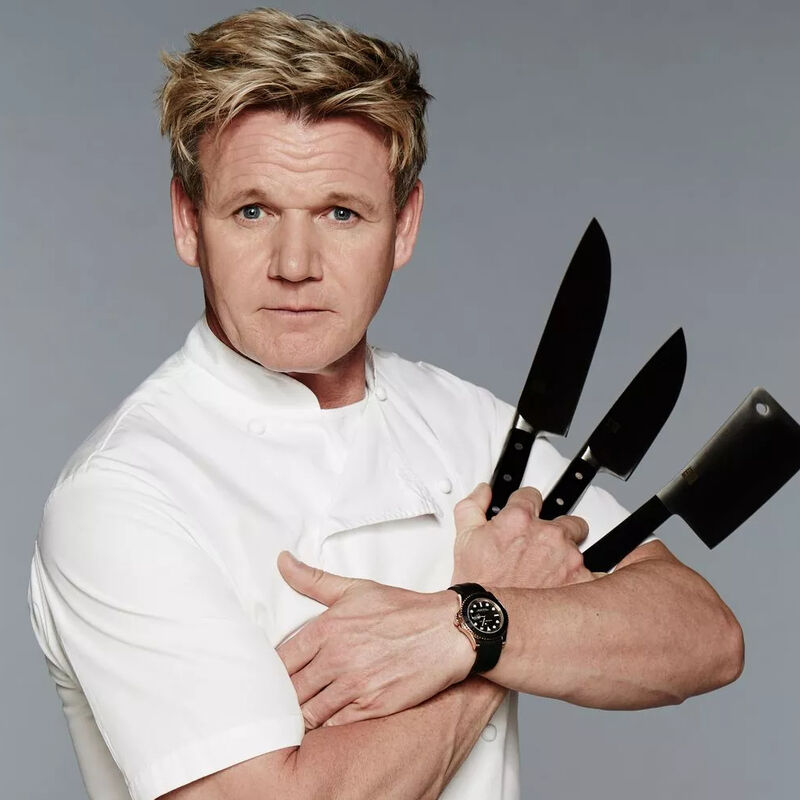
Gordon Ramsay
“This is not a restaurant… this is a battlefield.”
Multi-Michelin-starred chef, global television icon, and the ultimate master of precision, passion, and perfection in the kitchen.


“This is not a restaurant… this is a battlefield.”
Multi-Michelin-starred chef, global television icon, and the ultimate master of precision, passion, and perfection in the kitchen.
Gordon James Ramsay is a British chef, restaurateur, television personality, and writer. With 17 Michelin stars across his empire at peak and multiple three-star restaurants, he is one of the most decorated and influential chefs of the modern era.
Known for his fiery intensity, razor-sharp standards, and uncompromising pursuit of excellence, Ramsay has transformed countless kitchens and inspired millions of home cooks and professionals worldwide through shows like Hell’s Kitchen, Kitchen Nightmares, and MasterChef.
His philosophy is simple yet brutal: cook with passion, respect the ingredient, and never accept mediocrity.
At his peak, Ramsay held 17 Michelin stars across the globe — one of the highest totals ever achieved by a single chef.
Restaurants in London, New York, Las Vegas, Dubai, Singapore, and more. From fine dining to high-end casual concepts.
Hell’s Kitchen, Kitchen Nightmares, MasterChef, The F Word — shows that redefined culinary television forever.
Great cooking is not only about ingredients — it is about absolute control of time and temperature.
In every kitchen Gordon has run, the difference between a good dish and a three-Michelin-star dish is measured in seconds. He trains chefs to treat the clock as their most important tool.
Let the pan get screaming hot. Patience creates the Maillard reaction that delivers real flavour.
Every piece of meat must rest. Cutting too early is the fastest way to lose all the juices.
Seasoning is continuous. The best chefs adjust constantly, not just at the end.
Gordon’s Rule: If you are not slightly nervous about the timing, you are not pushing hard enough.

The best chefs do not hide ingredients — they celebrate them. Quality always comes first.
Gordon believes that if you start with average ingredients, no amount of technique can save the dish. He sources the absolute best and then does as little as possible to it.
A perfect tomato needs almost nothing. A poor tomato needs everything and still fails.
Salt is not the enemy. Under-seasoning is the fastest way to make food taste flat.
Stop adding. The moment the dish tastes complete, put the spoon down.
Gordon’s Rule: If the ingredient is perfect, your job is simply not to ruin it.

Comfort is the enemy of excellence. Gordon pushes people because greatness never happens in the comfort zone.
The high-pressure environment of his kitchens is intentional. He believes that only under pressure do cooks discover what they are truly capable of.
When service is crazy, stay calm. Panic destroys flavour faster than any mistake.
Never blame the equipment or the supplier. The plate that leaves the pass is your responsibility.
Mistakes happen. The only unforgivable thing is repeating the same mistake twice.
Gordon’s Rule: If it doesn’t challenge you, it will never change you.

Technique can be taught. Passion cannot. Without fire in the belly, the food will always taste ordinary.
Gordon’s most repeated message: cook with your heart or don’t cook at all. Every plate should carry the soul of the person who made it.
Even a simple omelette deserves your full attention. There are no small dishes.
The day you think you know everything is the day you start becoming average.
The kitchen is not about you. It is about the guest and the plate in front of them.
Gordon’s Rule: Passion is the only ingredient that cannot be measured — but everyone can taste it.

Fancy techniques mean nothing if you cannot cook a perfect scrambled egg or a flawless roast chicken.
Gordon constantly reminds young chefs that the foundation is everything. Master the fundamentals and the complex dishes become easy.
A sharp knife and consistent cuts are the silent foundation of every great kitchen.
Once you own the classics, you can create endless variations with confidence.
If you can cook eggs perfectly, you understand heat control better than most chefs.
Gordon’s Rule: Genius is just the basics executed with obsession.

A dirty station is the fastest way to lose control. Order in the kitchen creates order on the plate.
Gordon is ruthless about cleanliness. He believes a chef who cannot keep their station clean cannot keep their mind clear under pressure.
A clean cloth is as important as a sharp knife. Never let mess accumulate.
Everything in its place before service starts. Chaos on the bench becomes chaos on the plate.
Always finish cleaner than you started. This single habit separates professionals from amateurs.
Gordon’s Rule: If your station looks like a bomb site, your food will taste like one.

Never trust a recipe blindly. Your palate is the final and most important judge.
Gordon tastes every component multiple times during cooking. He believes recipes are guides, not gospel — the tongue always has the last word.
Know the baseline flavour first. Only then decide what it needs.
Cross-contamination ruins both hygiene and accurate tasting.
Timers help, but your tongue tells you when something is truly ready.
Gordon’s Rule: If you are not tasting, you are guessing — and guessing is not cooking.

Heat is a living thing. The best chefs do not fight it — they dance with it.
Understanding how heat moves through food is one of the biggest differences between home cooks and professionals. Gordon treats temperature like a precise instrument.
Searing and caramelisation demand aggressive heat. Do not be shy.
Delicate proteins and sauces need low, patient heat. Aggression here destroys texture.
A cold pan is the enemy of flavour. Give your equipment time to get ready.
Gordon’s Rule: Heat is not the enemy — ignorance of heat is.

The final moment is everything. How you present and serve the food is the last chance to show respect for the guest.
Gordon insists that every plate leaving the pass must look and feel intentional. Carelessness at the last second destroys hours of hard work.
A clean rim shows professionalism. Dirty edges scream carelessness.
Hot food hot. Cold food cold. There is no middle ground that tastes good.
Every garnish, every angle, every placement should have a reason.
Gordon’s Rule: The last thing the guest sees is the first thing they remember.

Salt and acid are the two most powerful tools in the kitchen. Use them with courage.
Gordon believes under-seasoning is one of the biggest sins in cooking. Food without proper seasoning is just ingredients sitting on a plate.
Season in layers. Waiting until the end never gives the same depth of flavour.
A squeeze of lemon or splash of vinegar can wake up an entire dish instantly.
If it needs more, add more. Timidity has no place in seasoning.
Gordon’s Rule: Bland food is a crime. Season like you mean it.

The moment you think you have arrived is the moment you start falling behind.
Gordon has always been obsessed with getting better. Even at the top of his game, he still studies, still questions, and still pushes for more.
Be harder on your own food than anyone else ever will be.
Every night has lessons. The best chefs capture them and use them.
Read, travel, stage, watch. The kitchen is a lifelong classroom.
Gordon’s Rule: Comfort is the enemy of greatness. Stay uncomfortable.

No chef wins alone. The strongest kitchens are built on trust, communication, and shared standards.
Gordon may be famous for his intensity, but behind the scenes he builds tight, disciplined teams that operate as one unit during service.
Call out times, call out needs, call out problems. Silence creates disasters.
Great teams see the pressure before it hits and move to support each other.
Everyone owns the quality. If one person drops the standard, the whole team suffers.
Gordon’s Rule: A kitchen full of individuals will always lose to a kitchen that works as one.

The most powerful dishes are often the simplest. Complexity is not the same as quality.
Gordon has always believed that true skill shows when you can take three perfect ingredients and turn them into something unforgettable.
If an element is not essential, take it off the plate. Less almost always tastes better.
Everything else exists only to support the star of the dish.
Some flavours have stood the test of time for a reason. Respect them.
Gordon’s Rule: If you need ten ingredients to make it taste good, you started with the wrong ones.

One perfect plate means nothing. Delivering that plate every single time is what separates the good from the great.
Gordon has always said that talent without consistency is useless. Guests return because they know exactly what they will get.
Create processes so the standard does not depend on who is cooking that night.
Never let a dish leave the pass without a final critical look.
Busy nights are when standards matter most. Never use volume as an excuse.
Gordon’s Rule: Anyone can cook a great dish once. Legends do it every service.

The final and most important secret: technique can be taught, but soul cannot. Put yourself on every plate.
At the end of everything, Gordon’s greatest message is simple. Food made without heart will always taste empty, no matter how perfect the technique.
Cook as if the person eating is someone you deeply respect and want to impress.
Your background, your memories, and your emotions should live inside the food.
Every single plate deserves your full presence and intention.
Gordon’s Final Rule: Technique will get you noticed. Soul will make them remember you forever.

Loading recommended tools...
Continue your journey. Discover the unique philosophies and secret techniques of more legendary culinary masters.
Know someone who needs these secrets? Send them Gordon’s wisdom.
Practical lessons you can use in your kitchen starting today.
Explore different philosophies from the world’s greatest culinary minds.
No fluff. Only proven principles used by the best in the world.