New Horizons Banner

Europa clipper

EUROPA CLIPPER

INVESTIGATING HABITABILITY

MISSION GOAL:

Searching for Life

NASA's Europa Clipper will conduct dozens of close flybys of Jupiter's moon Europa to determine if its subsurface ocean could support life.

LAUNCH DATE
OCT 2024

SpaceX Falcon Heavy.

FLYBYS
49 TIMES

Approaching at 25km altitude.

Shell Sync

Radar Mapping. Monitoring the REASON instrument buffer to track ice-shell thickness and subsurface water.

  • 📡 Radar: Subsurface Sounding Sync.
  • ❄️ Cryo: Chaos Terrain Protocol.
  • 🌊 Depth: Liquid Interface Buffer.
REASON SYNC
📡
ELEMENT
ICE
SHELL BUFFER SECURE
RADAR CALIBRATION SECURE

Vault Sync

Shield Mapping. Monitoring the radiation-hardened electronics vault to track Jovian magnetosphere impact.

  • 🛡️ Armor: Aluminum-Titanium Sync.
  • Field: Magnetic Flux Protocol.
  • ☣️ Limit: High-Energy Buffer.
SHIELD SYNC
🛡️
STATUS
HARDENED
RADIATION BUFFER SECURE
ELECTRONIC CALIBRATION SECURE

Ocean Sync

Molecular Mapping. Monitoring the MASPEX spectrometer to track salts and organic signatures.

  • 🧬 Biomarker: Organic Compound Sync.
  • 🧪 Salinity: Ionic Composition Protocol.
  • 💧 Habitat: Subsurface Ocean Buffer.
MASPEX SYNC
🧬
ZONE
HABITAT
ORGANIC BUFFER SECURE
CHEMICAL CALIBRATION SECURE

Europa Clipper: Ocean Worlds

The hunt for habitability takes us past the asteroid belt to Jupiter's icy moon, Europa. NASA's Europa Clipper is engineered with a heavy radiation-shielded matrix to execute close flybys, probing the deep subsurface salt ocean hidden beneath a 20-kilometer thick ice shell.
Mission Science Vectors Core Objective
Subsurface Radar (REASON) Ice Layer Thickness Mapping
Magnetometer (ECM) Ocean Depth & Salinity Metrics
Thermal Imaging (E-THEMIS) Detecting Active Vent Plumes
By measuring the moon's magnetic induced fields and radar echoes, Europa Clipper will confirm if this deep alien ocean holds the key ingredients for organic life: liquid water, chemical energy sources, and essential biogenic elements. This pushes our space architecture boundaries beyond traditional planet hunting into direct astrobiology validation frameworks.

Mission Trajectory & Power

To cross the deep void to Jupiter without carrying unsustainable fuel mass, Europa Clipper utilizes an advanced orbital trajectory architecture. It relies on gravity assists from Mars and Earth, stealing kinetic energy from the planets to slingshot itself toward the outer solar system.
Spacecraft Hardware Architecture Performance Metric
Mega Solar Arrays (30m Span) Peak Low-Light PV Efficiency
High-Gain Antenna (3-Meter) Deep Space Network X-Band Link
Rad-Hardened Vault (Titanium) 100x Standard Shielding Matrix
Operating 780 million kilometers away from the Sun means solar radiation is extremely weak. To counter this, Clipper unfolds massive 30-meter solar panels—the largest ever built by NASA for an interplanetary mission. Combined with a titanium vault designed to shield delicate processors from Jupiter's killer electron belts, the spacecraft represents the absolute pinnacle of current robotic deep space survival engineering.

Ingredients for Alien Life

Europa Clipper is not designed to detect life forms directly, but rather to determine if the environment can sustain them. For a world to be truly habitable, it requires an intricate planetary matrix balancing three primordial ingredients.
Habitability Criteria Matrix Detection Methodology
Liquid Water Engine Subsurface Ocean Verification
Chemical Substrates Mass Spectrometry of Plumes
Tidal Energy Vectors Gravitational Flexing Models
The energy driving Europa's deep biosphere doesn't come from sunlight, but from gravitational flexing. As Jupiter's immense gravity pulls on the moon during its eccentric orbit, the friction warms Europa's interior, maintaining a liquid ocean and generating hydrothermal seafloor vents. Europa Clipper's mass spectrometers will sample particles directly from space, checking for essential organic building blocks like carbon, hydrogen, nitrogen, oxygen, phosphorus, and sulfur.

Scientific Suite & Flight

To decode the secrets of Europa without entering its lethal radiation-heavy orbit permanently, Europa Clipper carries a highly advanced suite of nine science instruments, all synchronized to capture high-fidelity metrics during rapid, calculated flybys.
Mission Milestone Profile System Specifications
Launch Vehicle Architecture SpaceX Falcon Heavy (Fully Expendable)
Mass Spectrometer Core (MASPEX) High-Precision Volatile Gas Analyzer
Surface Arrival Window Jupiter System Orbit Insertion: 2030
Launched successfully into deep space aboard a heavy-lift launch system, the probe is currently navigating its long interplanetary transfer profile. Armed with the MASPEX spectrometer to sniff out gaseous plumes and high-resolution optical cameras to map the shifting ridges of the fractured ice crust, Clipper will give humanity its first comprehensive look inside a confirmed ocean world. The data returned will establish whether our solar system possesses a second, fully independent genesis of habitability.

FAQs

Everything you need to know about humanity's upcoming journey to an ocean world.

NASA's Europa Clipper will perform dozens of close flybys of Jupiter's moon, Europa, to determine whether there are places below its icy surface that could harbor life. It aims to measure shell thickness, study the composition, and map its geology.
The mission launched in October 2024. Utilizing gravity assists from Mars and Earth, it is scheduled to enter orbit around Jupiter in April 2030 to begin its extensive scientific observation phase.
Jupiter’s intense radiation belt would quickly destroy the spacecraft's delicate electronics if it stayed in a permanent low orbit around Europa. An elliptical orbit around Jupiter allows Clipper to swoop in quickly for data and retreat out of the harsh radiation zone to safely transmit findings back to Earth.
Yes, the spacecraft carries a commemorative vault plate. It features a poem by U.S. Poet Laureate Ada Limón, a silicon chip containing millions of public names, and visual waveforms of the word "water" spoken in over 100 human languages.
Clipper's MASPEX and SUDA instruments are calibrated to search for critical biogenic elements, specifically carbon, hydrogen, nitrogen, oxygen, phosphorus, and sulfur (CHNOPS). These elements form the foundational chemical matrices for molecular biological processes.
The REASON instrument utilizes dual-frequency ice-penetrating radar waves (9 MHz and 60 MHz). By measuring the precise nanosecond delay and echo reflections bouncing off density boundaries, it maps the internal ice structure and flags the exact liquid water transition threshold.
Europa's eccentric orbit around Jupiter subjects it to variable gravitational pulling forces. This continuous squeezing and stretching creates deep internal kinetic friction within the moon's metallic core and rocky mantle, generating substantial thermal energy to sustain a liquid ocean without relying on sunlight.
Europa Clipper FAQ Illustration


Europa Clipper Mission

Europa Clipper: Ocean Worlds Explorer

The Europa Clipper mission is NASA’s ambitious journey to decode the mysteries of Jupiter’s icy moon. Explore the cutting-edge engineering behind ice-penetrating radar, subsurface ocean chemistry, and the quest to determine Europa's potential for life.

EXPLORE THE MISSION


Paper

CLIPPER DATA UPLINK ❄️

Objective: 10-Item Icy Moon Calibration.

Sources

ICE-PENETRATING RADAR


The **REASON** instrument will peer through the ice shell, which is estimated to be 15–25 km thick, to search for the subsurface ocean and pockets of water.

RADAR SPECS
Instrument: REASON

SOLAR POWER GIANT


With arrays spanning over **30 meters**, Clipper is the largest solar-powered spacecraft NASA has ever built for a planetary mission.

SPACECRAFT DATA
Width: 100+ Feet

RADIATION VAULT


To survive Jupiter's intense radiation environment, the probe's sensitive electronics are housed in a thick-walled vault made of aluminum and zinc.

SHIELD DATA

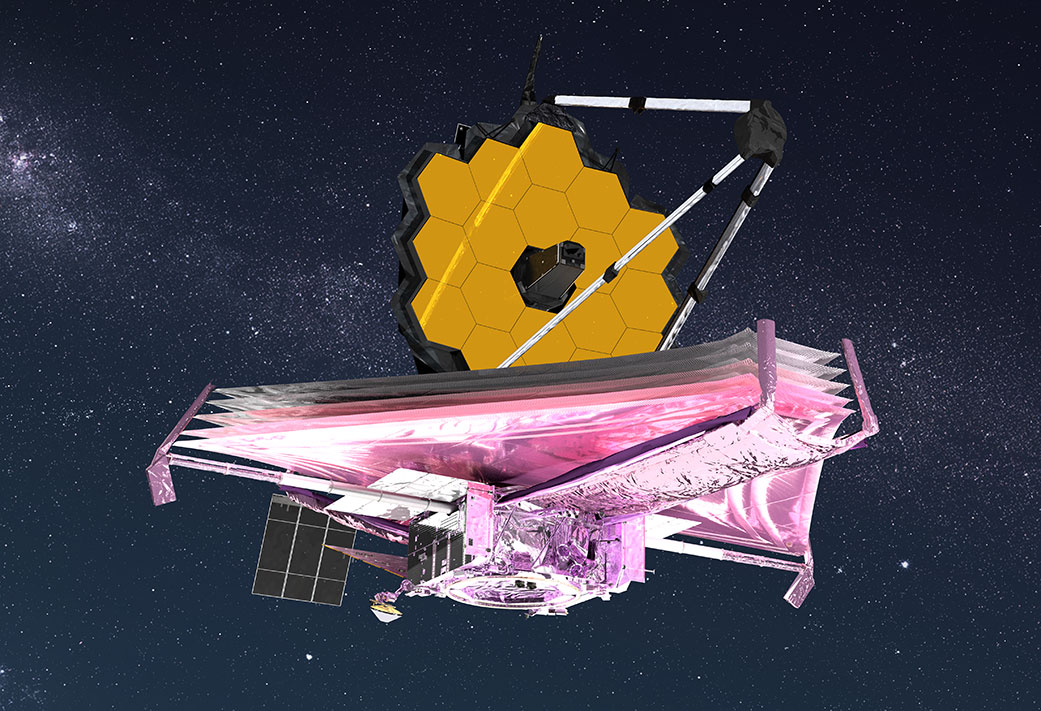
Feature: Armor Vault
New Horizons ASTRO
EUROPA CLIPPER
[ START MISSION CONTROL ]