Moving beyond simple keyword density, modern SEO relies on understanding 'Search Intent'. By mapping long-tail keywords to specific stages of the user journey—informational, navigational, or transactional—you ensure that your content directly addresses the user's underlying needs. This significantly lowers bounce rates and boosts dwell time, which are critical ranking signals for search engine algorithms.
Backlinks remain the backbone of Domain Authority, but the quality has completely superseded quantity. Earning contextually relevant links from high-authority domains signals to crawlers that your site is a credible source of information. Focus on creating 'linkable assets' like original research or interactive tools, which naturally attract citations and references from reputable outlets, effectively transferring authority to your domain.
Since Google has fully transitioned to mobile-first indexing, the mobile version of your site is the primary version that search engines evaluate. This goes beyond just being 'responsive'; it requires optimizing touch targets, font readability, and ensuring that no critical content is hidden behind complex mobile UI interactions. A seamless mobile experience is no longer optional; it is the baseline for ranking in today's search environment.
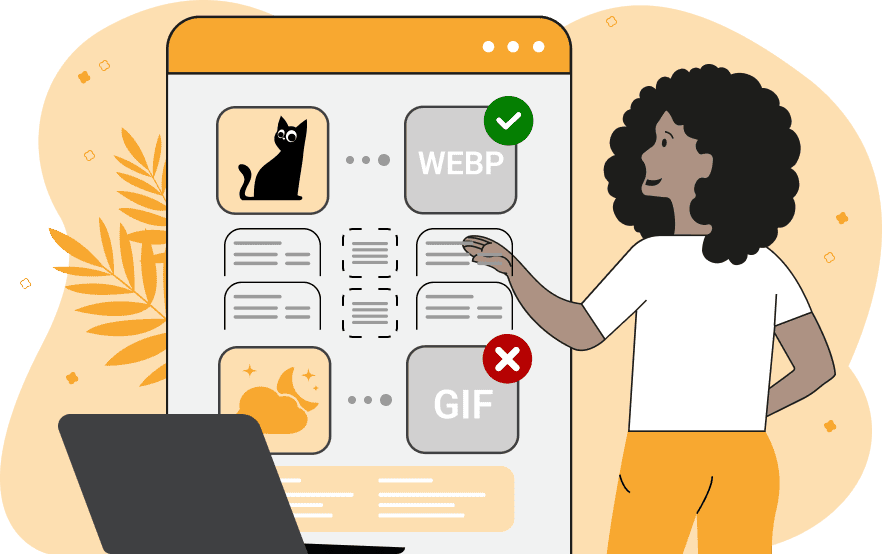
Page load speed is a direct ranking factor, but specifically, Google's 'Core Web Vitals' measure the perceived visual stability and interactivity of your pages. By optimizing image assets using WebP formats, leveraging browser caching, and minimizing main-thread JavaScript execution, you can achieve the sub-2.5-second 'Largest Contentful Paint' (LCP) time required to provide a professional user experience.
The final and perhaps most overlooked hack is Click-Through Rate (CTR) optimization. Even if you rank #1, a weak meta title or description will fail to capture traffic. By using power words, brackets, and solving a specific pain point directly in the snippet, you entice users to click your result over competitors. High CTR tells Google that your link is the most relevant answer to the user's query, creating a self-reinforcing loop that pushes your page further up the SERP rankings consistently.
Internal links are the bridge between your pages. By creating a 'hub and spoke' model, you pass link equity from your high-authority pages to deeper, niche articles. This helps search crawlers map your entire site's topic cluster, strengthening your topical relevance and ensuring that every piece of content has a clear path for discovery.
Schema markup provides search engines with a literal map of your content. By adding 'Article', 'Author', or 'FAQ' schema, you increase the likelihood of winning rich snippets. These enhanced results stand out visually on the SERP, directly increasing your click-through rate and signaling technical professionalism to search algorithms.
Search engines prioritize information that is current. Regularly revisiting high-ranking articles to update statistics, add recent insights, or fix outdated links prevents content decay. A simple update signal can often trigger a re-crawling event, helping you maintain or reclaim your competitive ranking position over time.
Since crawlers cannot interpret visual data, your alt-text is the primary way they understand image context. Using descriptive, keyword-aligned alt-text improves accessibility and opens up a secondary traffic stream through Google Images. This technical detail is a small investment that adds up to significantly higher overall domain visibility.
Security is a non-negotiable ranking signal. Migrating your site to HTTPS ensures data encryption and builds immediate user trust. Modern browsers highlight insecure sites, which increases bounce rates instantly. By ensuring your security certificates are valid, you remove a major technical barrier that could be suppressing your search authority.
Video content is highly engaging but opaque to search bots. By embedding videos with 'VideoObject' schema, you provide metadata about duration, upload date, and content summary. This makes your videos eligible for carousel features and 'key moments' in search results, capturing traffic from users who prefer visual content over text.
For geographic relevance, your Name, Address, and Phone number (NAP) must be identical across every online directory. Discrepancies confuse search algorithms, leading to loss of trust in your local footprint. Keeping these details uniform is the quickest way to stabilize your authority within the local search 'Map Pack'.
Do not wait for a ranking drop to check your site health. Using Lighthouse or Search Console to monitor metrics like Cumulative Layout Shift (CLS) allows you to resolve issues proactively. Consistent tracking ensures that your site stays optimized, preventing hidden performance bottlenecks from negatively affecting your user experience and search ranking.
Experience, Expertise, Authoritativeness, and Trustworthiness are critical for modern ranking. Clearly attribute your content to expert authors, link to their professional bios, and maintain a history of factual accuracy. This human-centric approach proves to search evaluators that your domain is a reliable, high-quality information source.
A logical URL structure is essential for crawl efficiency. Use human-readable, breadcrumb-friendly URLs that describe the content hierarchy. Short, clean paths allow search crawlers to navigate your site effortlessly, while the absence of complex parameters ensures that your page titles are properly parsed and understood in the index.
To avoid duplicate content penalties, always use canonical tags. This tells search engines which version of a page is the 'master' copy, consolidating your link equity and preventing ranking dilution across pages with similar content or URL parameters.
Efficient crawling starts with a clean robots.txt file. By explicitly telling crawlers which directories to ignore—such as admin pages or staging environments—you ensure they focus their 'crawl budget' exclusively on your high-value, indexable content.
Breadcrumbs enhance both user experience and crawlability. They provide a clear visual path back to the homepage and help search engines understand the taxonomy of your site, which often results in improved sitelink displays directly within search results.
A dead link shouldn't be a dead end. Optimize your 404 error pages with links back to your primary categories or a search bar. This simple step keeps users on your site and prevents the 'bounce' that occurs when a visitor lands on a non-existent page.
High-volume keywords are competitive and difficult to rank for. By targeting 'long-tail' phrases—specific, question-based queries—you capture users who are further along in their search journey and significantly more likely to convert upon finding exactly what they need.
An XML sitemap is a direct roadmap for search engine crawlers. By submitting your sitemap via Search Console, you ensure that even your deepest, newest pages are discovered and indexed, bypassing the need for crawlers to find links to them manually.
Google monitors how long users spend on your site after clicking a result. By embedding interactive elements or providing clear, immediate answers in the first 100 words, you increase 'dwell time', signaling to Google that your page effectively satisfied the user's intent.
Voice queries are conversational. Optimizing your content for 'natural language' questions (e.g., 'How to...' instead of just 'SEO tips') positions you to appear in the top-ranking 'Position Zero' answers often read back by AI assistants.
Don't be afraid to link out to reputable, high-authority external sources. Linking to well-researched, external data adds credibility to your claims, helping search engines understand the broader context of your topic and reinforcing your position as a well-informed hub.
Heavy images are the primary cause of slow load times. Use tools to compress images without losing quality and serve them in modern formats like WebP. Reducing the payload of your pages is the single most effective way to improve Core Web Vitals.
While not a direct ranking factor, social shares drive referral traffic and increase the visibility of your content. Higher visibility leads to more eyes on your pages, which correlates with an increased probability of earning organic backlinks from interested readers.
Implementing FAQ schema allows your common questions and answers to appear directly in search results. This occupies more screen real estate on the SERP, effectively pushing competitors down and making your listing appear more authoritative.
Use H1 tags for titles, and H2/H3 tags to logically structure your content. This helps crawlers understand the main points versus sub-points, making it easier for search engines to index your content for specific, targeted queries.
Dynamic URLs with messy parameters (e.g., ?session_id=123) can lead to indexing issues. Use Search Console to manage parameter handling, ensuring crawlers don't waste time indexing the same page with multiple different URL variations.
A table of contents improves user navigation and can generate 'jump links' in Google search results. These jump links allow users to navigate directly to the section of your article that answers their specific question, increasing your relevance.
Broken links signal a neglected site to search algorithms. Regularly scan your domain for 404 errors and update or remove dead links to ensure a seamless experience, which protects your domain’s quality rating.
Keep your URL slugs clean and relevant to the page content (e.g., /seo-hacks/ instead of /p=123). Descriptive, keyword-optimized slugs provide both the user and the search bot with immediate context about what the page covers.
Latent Semantic Indexing (LSI) keywords are contextually related terms to your main topic. Including them helps search engines confirm the relevance of your content, making it easier to rank for a wider array of semantically related search terms.
Important content should be accessible within three clicks of the homepage. Reducing the distance between your root domain and your deep-content pages improves crawl depth, ensuring that Google finds and indexes your best material faster.
While not a direct factor, a healthy text-to-code ratio ensures your page isn't overly cluttered with heavy scripts. A high percentage of meaningful content compared to markup code often indicates a focus on providing value to the user over fluff.
Using a Content Delivery Network (CDN) caches your site on servers worldwide. This minimizes physical distance between your server and the user, drastically reducing latency and improving TTFB (Time to First Byte), which is a key performance metric.
Configure your server to instruct visitor browsers to cache static assets like CSS, JS, and images. This prevents repeat visitors from needing to re-download these files, leading to near-instant page loads on subsequent visits.
Minify your HTML, CSS, and JavaScript files by removing unnecessary whitespace, comments, and line breaks. This reduces file size and speeds up parsing time for browsers, directly contributing to a better PageSpeed Insights score.
Implement native lazy loading for images and iframes. This ensures that media is only loaded as the user scrolls toward it, drastically reducing the initial page weight and improving the speed at which your core content becomes visible.
Ensure multiple pages aren't competing for the same primary keyword. If they are, 'cannibalization' occurs, where your own pages split your search authority. Consolidate competing content into a single, high-authority masterpiece to regain ranking control.
Always audit your content against the 'SERP intent'. If you are writing an article but the top results are product pages, your content will likely never rank. Adjust your content type (e.g., Guide vs. Tool vs. Product) to match what Google already deems the 'best' answer.
Treat your Google Business Profile like a social feed. Post regular updates, new photos, and events to keep the profile 'active'. This signals to Google that your local business is currently operating and relevant to local searchers.
Active, high-quality discussion in comments can add semantic depth to your page. However, ensure comment spam is aggressively moderated, as spammy links or irrelevant keywords can diminish the quality score of your page in the eyes of search bots.
Google prioritizes accessible web design. Using semantic HTML, high color contrast, and proper ARIA labels makes your site easier for assistive technologies to read—a standard that search engines increasingly interpret as a sign of high-quality, inclusive web development.
Implement Open Graph (OG) tags to control how your pages look when shared on social media. While indirectly helping SEO, this ensures that the 'clickability' of your links is maximized across all platforms, driving more referral traffic back to your domain.
Analyze your server log files to see how search engine spiders are actually interacting with your site. This reveals 'hidden' issues like excessive crawling of low-value pages or unexpected errors that aren't apparent in standard analytics tools.
Google views content through 'entities' rather than just strings of text. Mentioning related entities (people, places, organizations) within your content helps Google establish the semantic context of your topic, improving your topical authority score.
Ensure that no page on your site is more than three clicks away from the homepage. A flat site architecture helps crawlers find your content faster and ensures that link equity flows efficiently from your high-traffic pages to deeper, newer content.
Instead of optimizing for single keywords, group related keywords into 'clusters' that share the same search intent. This allows you to create comprehensive, authoritative pages that satisfy the user’s entire research journey, rather than just answering one narrow query.
Treat your SEO like a laboratory. A/B test your meta titles, descriptions, and even your page layout to see what generates the highest click-through rate. Data-driven adjustments ensure your site performance continues to improve long after initial deployment.
You have systematically navigated the pillars of search visibility: architectural alignment, user-intent-focused metadata, and high-performance delivery. SEO is not a static task; it is an ongoing process of refining how your content communicates with the global index. By implementing these strategies—semantic structure, performance-driven asset delivery, and intent-aligned copy—you have established a robust framework for New Horizons. You now possess the methodology to ensure your digital tools and insights are not just created, but discovered, indexed, and valued by the audiences you intend to serve.
Your SEO journey doesn't end with publishing; that is when the real work begins. To truly "hack" your reach, you must monitor your performance via search console data. Look beyond vanity metrics like raw traffic; analyze the "Click-Through Rate" (CTR) for specific queries to see if your meta descriptions are resonating, and monitor your "Average Position" to determine if your content is authoritative enough to occupy the top spots. This feedback loop allows you to pivot your content strategy, update underperforming pages, and double down on topics where New Horizons already has demonstrated expertise.
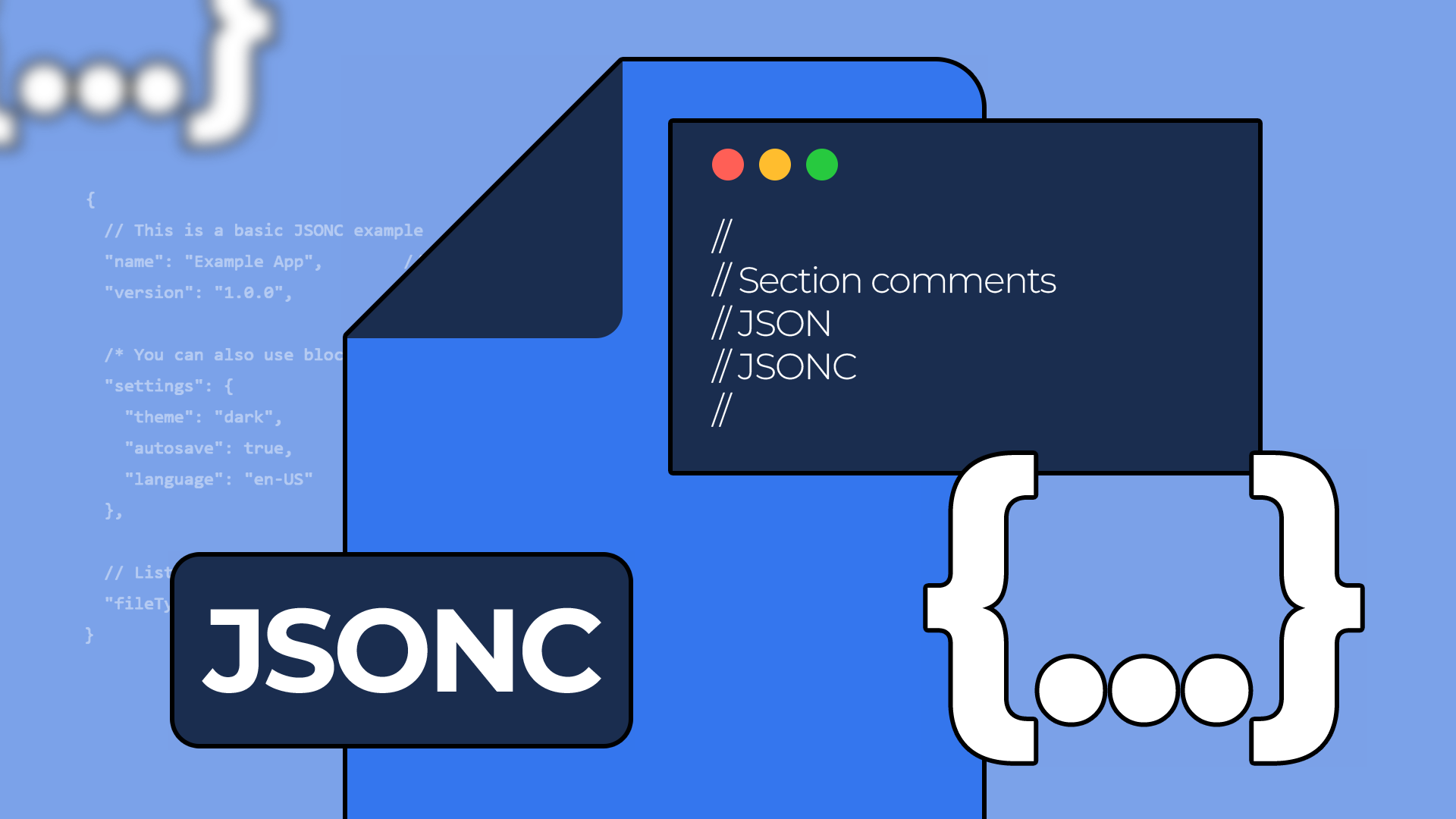
Schema markup is a powerful technical tool that provides search engines with explicit, structured clues about the content of your pages. By adding JSON-LD structured data to your New Horizons modules, you move beyond simple keyword indexing to "entity-based" SEO. Whether it's defining a calculator as a "SoftwareApplication" or a tutorial as "HowTo" content, schema helps search engines display rich snippets in results—like star ratings, preparation times, or direct tool links. This makes your entries stand out visually, drastically increasing your Click-Through Rate while providing the machine-readable context required for high-authority indexing.
Accessibility (A11y) is frequently overlooked in search strategy, yet it is a primary indicator of quality for modern algorithms. When you implement robust alt-text, semantic HTML structure, and high-contrast, navigable layouts, you aren't just serving users with disabilities—you are creating a cleaner, more parseable map for search crawlers. Every aspect of accessibility, such as providing descriptive labels for your conversion buttons or ensuring logical heading hierarchy, directly informs the engine about the depth and organization of your content. By prioritizing A11y, you broaden your audience reach while simultaneously signaling to the index that your platform is inclusive, high-quality, and structurally sound.